 Altai Turismo
Jamón Ibérico 101: A Guide's Guide to Spain's Greatest Ham
11 July 2026 · by Alba Delgado · Altai Turismo
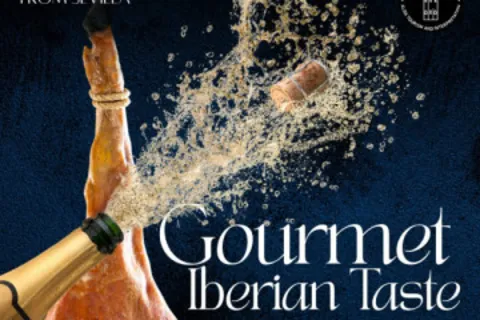
Jamón ibérico is Spain’s most prized food: a dry-cured ham from the native Iberian pig, aged for years in mountain cellars until the fat turns silky and the flavor turns deep, nutty and sweet. The finest grade — jamón 100% ibérico de bellota, from purebred pigs fattened on acorns in open oak pasture — is widely considered the best ham in the world. It is also surrounded by confusing labels, half-true legends and tourist-menu shortcuts.
As licensed local guides in Seville, we spend a lot of time at bar counters explaining what the little colored tags on the hoof mean. This is that explanation written down: how the grades work, why acorns matter, how to order like a local, and where to taste the real thing — in the city or at the source in the Sierra de Huelva.
What Exactly Is Jamón Ibérico?
Jamón ibérico comes from the Iberian pig (cerdo ibérico), a dark-skinned, slender-legged breed native to the southwestern Iberian Peninsula. Unlike ordinary pigs, it stores fat inside the muscle, so a good slice looks marbled like fine beef and melts at room temperature.
This is the key distinction from jamón serrano, the everyday Spanish ham: serrano comes from white-breed pigs raised on feed and cured for far less time — a different product from a different animal, not a budget ibérico.
Everything about ibérico is regulated by Spain’s ham quality law, the Norma de Calidad (Royal Decree 4/2014). It controls three things:
- Breed purity — 100%, 75% or 50% ibérico. The mother must always be purebred Iberian; a 50% ham has a Duroc father.
- Feeding and lifestyle — acorn-fed and free-range, free-range with natural feed, or farm-raised on feed.
- Curing — a ham (back leg) must cure for a legal minimum of 600 days; a paleta (front shoulder) at least 365 days. Top acorn-fed hams routinely cure 36 to 48 months.
Every certified leg carries a numbered, tamper-proof seal fitted at the slaughterhouse — and its color is the whole grading system in miniature.
How to Read the Label: The Four Color Grades
Since 2014, every jamón ibérico in Spain wears one of four color-coded seals on the hoof. Memorize this table and you will read a ham better than most menus describe it:
| Seal color | Label term | Breed | Feed & lifestyle |
|---|---|---|---|
| Black | Jamón 100% ibérico de bellota | 100% Iberian | Free-range in the dehesa, fattened on acorns and wild pasture |
| Red | Jamón ibérico de bellota | 75% or 50% Iberian | Free-range in the dehesa, fattened on acorns and wild pasture |
| Green | Jamón ibérico de cebo de campo | 100%, 75% or 50% | Free-range outdoors, fed on pasture plus natural feed |
| White | Jamón ibérico de cebo | 100%, 75% or 50% | Farm-raised on grain-based feed |
A few practical notes:
- Black label is the summit: purebred and acorn-fed. This is the only ham legally allowed to use the famous nickname “pata negra.”
- Red label is still true acorn-fed bellota ham — often spectacular — just from crossbred pigs.
- Green and white labels are honest, more affordable ibérico — marbled and characterful, but without the acorn finish.
- The label always states the ibérico percentage. If a menu or shop just says “ibérico” with no percentage and no color, ask.
Why Acorn-Fed (Bellota) Is Special
The magic ingredient is the dehesa — the vast, human-shaped woodland of holm oaks and cork oaks that covers millions of hectares of southwestern Spain. Every autumn the oaks drop their acorns (bellotas), and the pigs are turned loose for the fattening season known as the montanera, which runs roughly from October to early March.
The numbers are remarkable, and they are written into law:
- During the montanera a pig can eat 6 to 10 kilos of acorns a day, roaming the pasture to find them.
- To qualify as bellota, the animal must gain at least 46 kilos over a minimum of 60 days in the dehesa.
- Stocking is strictly limited — in practice roughly one pig per hectare of oak pasture — so real bellota ham can never be an industrial product.
- No ibérico pig may be slaughtered before 10 months of age; bellota animals are typically 14 months or older.
All that exercise and acorn fat transforms the meat. Acorns are rich in oleic acid — the same monounsaturated fat as olive oil — and in a finished bellota ham more than half the fat can be oleic. Spaniards call the ibérico pig “la aceituna con patas”: the olive with legs. It is why the fat should never be trimmed away — served at room temperature it turns translucent and glossy, and carries most of the aroma.
Jabugo and the Sierra de Huelva: The Source
Ask any Spaniard where the greatest hams come from and one word comes up instantly: Jabugo — a small village in the Sierra de Aracena y Picos de Aroche natural park, in the green mountains of northern Huelva province, where cool, humid winters and hot, dry summers give the natural curing cellars (bodegas) their slow, perfect rhythm.
Spain has four protected designations of origin (DOP) for ibérico ham — Jabugo, Guijuelo, Dehesa de Extremadura and Los Pedroches — and the Jabugo DOP is the strictest of all: it certifies only acorn-fed ham from the region.
Two names in the Sierra are worth knowing:
- Cinco Jotas (5J), curing ham in Jabugo since 1879, working exclusively with 100% ibérico de bellota — for many aficionados the reference producer.
- Eiriz, a family-run farm near Aracena that has raised and cured ibérico for generations — smaller, personal, a lovely contrast to the grand cellars.
These are exactly the two destinations of our full-day ham excursion from Seville into the Sierra de Huelva. The day is organized by SensaConcierge in collaboration with Altai Turismo, runs from €2,296 per private group, and it is the one experience we offer where private transport is included — along with a visit to the Gruta de las Maravillas in Aracena, one of Spain’s first show caves, open to visitors since 1914.
How It’s Cut — and How to Order It Like a Local
Great ham can be ruined in the last ten seconds. A few rules the cortadores (professional carvers) live by:
- By hand, always. A whole leg is set on a jamonero stand and carved with a long, flexible knife into slices so thin they are almost translucent — machine slicing crushes the fat.
- Small slices, room temperature. The fat should glisten. Ham straight from a refrigerator is mute.
- The leg is not uniform. The maza (the wide, main face) is the juiciest and most marbled; the babilla (the opposite side) is leaner.
Ordering in Seville is simple. Ask for “una ración de jamón ibérico de bellota” (a full plate) or a media ración (half). Eat it with your fingers or with the crisp little breadsticks called picos — and please, nobody cooks it. The classic local pairing is a chilled, bone-dry fino or manzanilla sherry, whose salty edge cuts the richness of the fat.
Common Misconceptions
- “The fat should be trimmed off.” The oleic-rich fat is the flavor. Trimming it is like skimming the crema off an espresso.
- “It’s like prosciutto.” Italian prosciutto is a fine ham from white pigs with a shorter cure — sweeter, softer, milder. Bellota ibérico is deeper, nuttier and more persistent.
- “All ibérico is acorn-fed.” Only black and red labels are. White-label cebo never saw an acorn — it can still be tasty, but it should be priced accordingly.
Where to Taste It in Seville
You can eat decent jamón almost anywhere in Seville — and mediocre jamón in every tourist canteen around the Cathedral. The simplest way to know what is on your plate is to taste with someone who can explain it.
Our Iberian ham and wine excursion from Seville is a full day in the Sierra de Huelva, where you compare grades, learn to read the labels and taste ibérico de bellota — paired with wine — at the source rather than off a menu. It is quoted per private group and arranged around your day — a perfect afternoon after a morning of private sightseeing in Seville.
And if you want the full pilgrimage — pigs in the pastures, quiet curing cellars, the Sierra air — the full-day excursion to 5Jotas or the Eiriz farm brings you to the source itself. Food-loving travelers who enjoy a day out of the city might also like our guide to the Seville–Ronda day trip, another classic Andalusian food-and-wine escape.
Frequently Asked Questions
What is the difference between jamón ibérico and jamón serrano?
Breed, feed and time. Ibérico comes from the native Iberian pig, which marbles fat into the muscle; the best grades are acorn-fed and cured for three to four years. Serrano comes from white-breed pigs raised on feed and cured for far less time. Serrano is a good everyday ham; bellota ibérico is a different league — and a different price.
What does “pata negra” actually mean?
Literally “black hoof” — but a dark hoof proves nothing, since some non-Iberian pigs have them too. Legally, since Spain’s 2014 quality law, the term may only describe black-label ham: 100% ibérico de bellota, purebred and acorn-fed. If a menu says pata negra, it is claiming the very top grade; the seal on the leg is the proof.
Are the white specks in my ham safe to eat?
Yes — they are tyrosine crystals, an amino acid that forms naturally during long curing. Far from a defect, they usually signal a well-aged ham.
Can I bring jamón ibérico back to the United States?
Generally no. U.S. customs rules do not allow travelers to bring Spanish pork products home in their luggage, even vacuum-sealed — it risks confiscation at the airport. Some producers, including Cinco Jotas, do export to the U.S. through approved commercial channels, so look for genuine bellota ham from specialty importers at home. Our advice: eat generously while you are here.
Have questions, or want to build a food-focused day in Seville? Message us on WhatsApp (+34 609 285 251) and our licensed local guides will arrange the tasting around your plans.
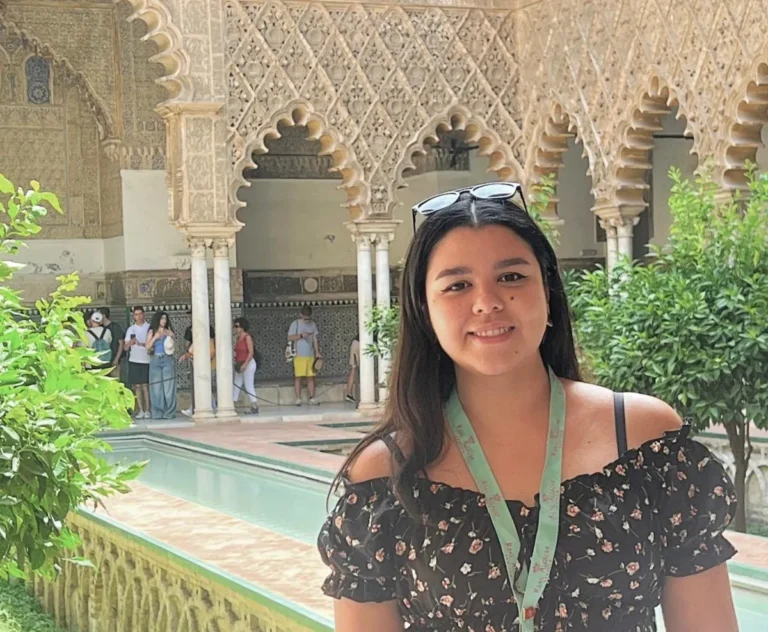
Official licensed guide and founder of Altai Turismo, a registered official guide service (Andalusian Tourism Registry AIAT/SE/00126-6), specialized in the Sephardic Jewish heritage of Seville.
Related posts
See it with a licensed local guide
Altai Turismo runs private, expert-led tours of Seville and Córdoba. Tell us your dates and we'll design a tour around you.
Plan my tour on WhatsApp